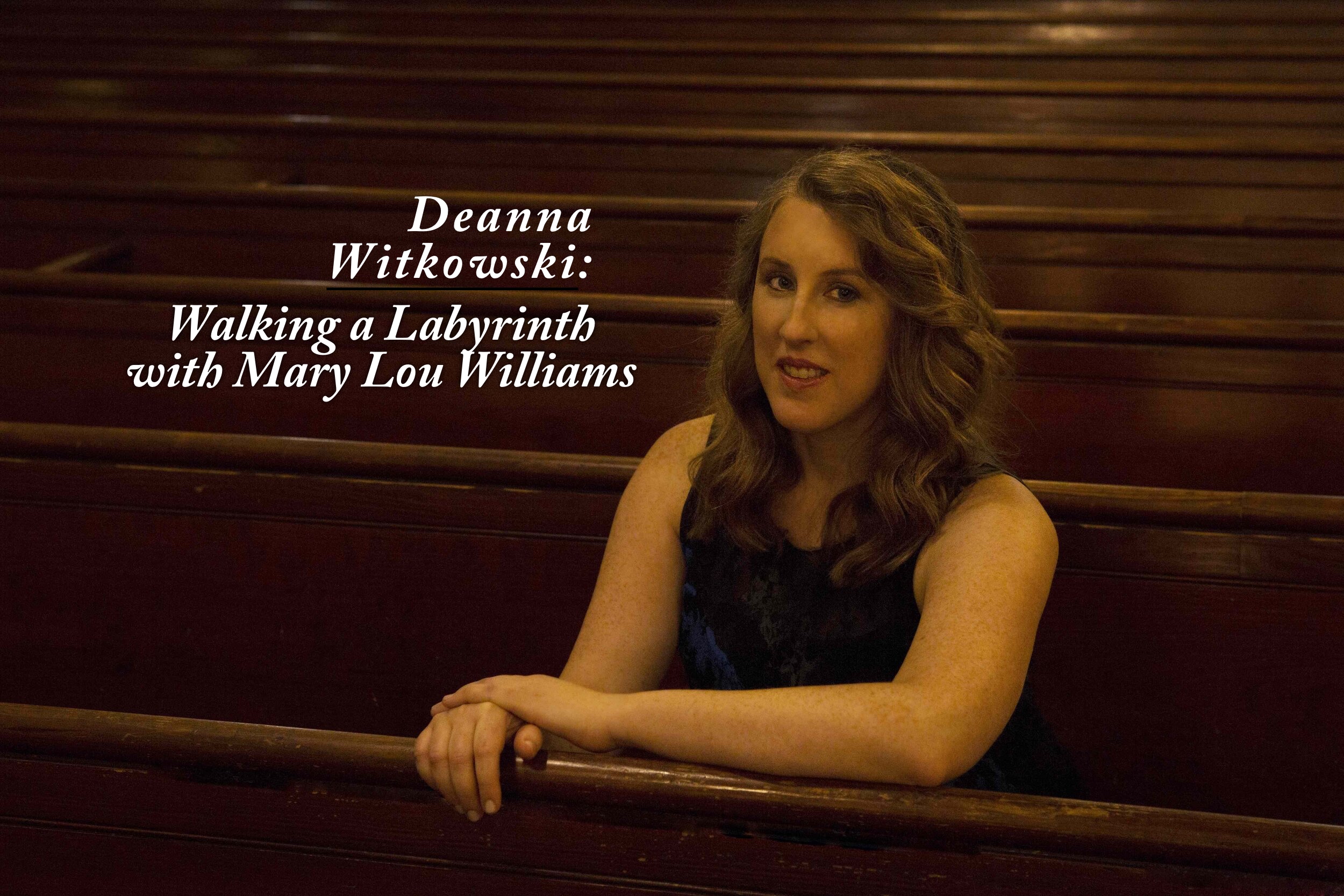
David Sanford discusses his personal relationship and analysis of John Lewis’s Blues in A Minor and how it led to his 2 cello arrangement.
Rio Sakairi discusses the nature of jazz and her experience with that question from an arts programming perspective.
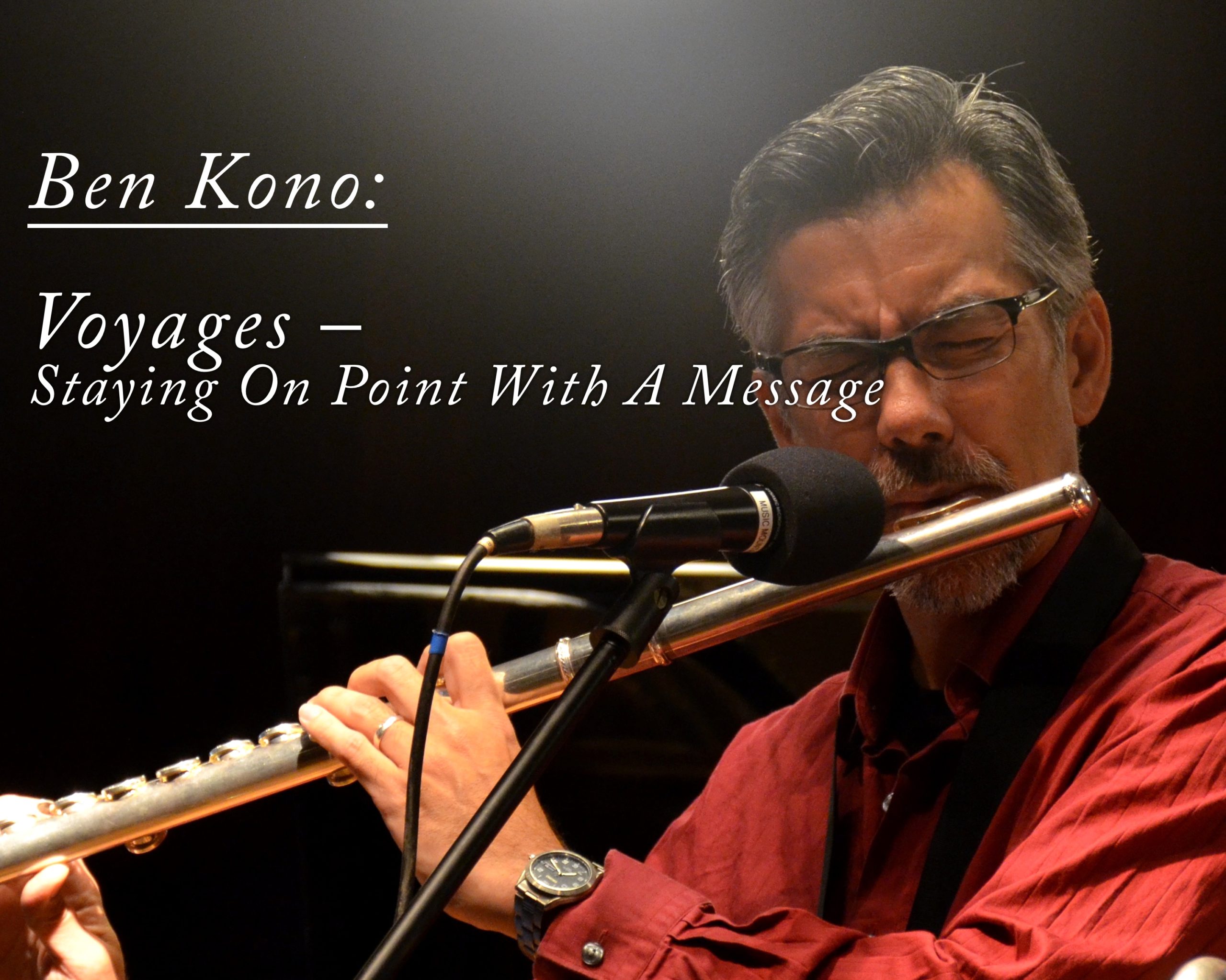
S’yo Fang discusses how texture and gestalt influenced his award-winning work “Tree.”
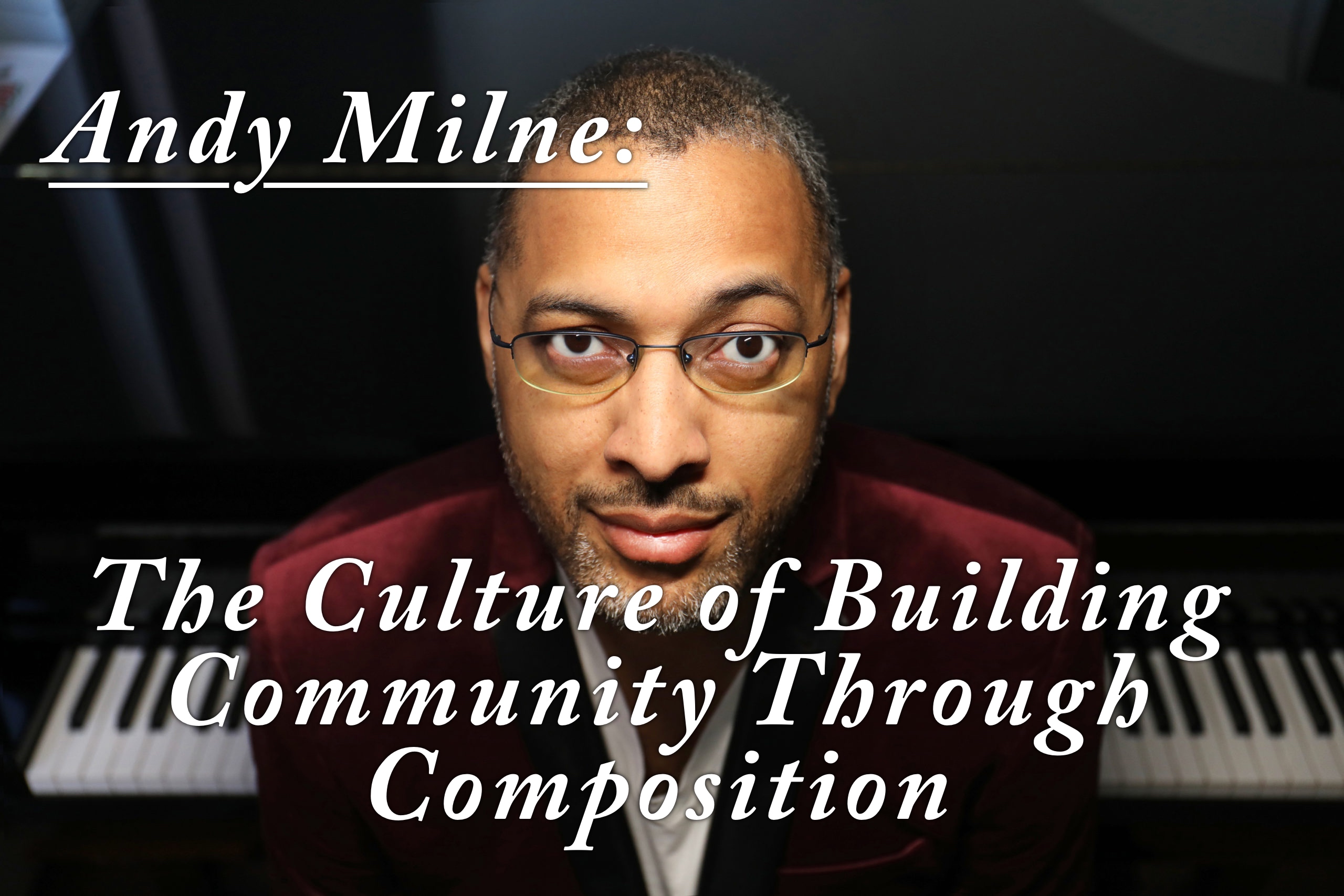
Frank Carlberg discusses techniques he uses to open up harmonic possibilities for new works with a particular focus on triads, tetrachods, and other harmonic devices.
I’m truly flattered to be asked to contribute to the ISJAC blog. Thank you for inviting me. Even though I grew up in Vancouver BC, playing trumpet in lots of big bands, funk, and salsa bands, my compositional training was in classical new music, and my compositional goal and interest is to bridge the gap between these diverse influences. I’m very conscious of trying to create something unique, while being impactful, exciting, and entertaining. In my quest for finding freshness, I look for unusual harmonic approaches, unusual forms/grooves/genres, and so on.
One way to create melodic freshness is with the seldom-used (but easily applied) technique of hocketing. This method, similar to klangfarbenmelodie, is the simple dividing of a melody between two or more instruments. This can create musical texture, rhythmic interplay, and the illusion of counterpoint. Excellent examples of hocketting can be found in in this brief passage of Prokofiev’s Piano Concerto #3 (1921), and in this section of Louis Andriessen’s De Staat (1976). An interesting variation is the micro-canon effect found in David Lang’s Sweet Air (1999) or Louis Andriessen’s Hout (1991). Here the melodies are repeated an eighth note or quarter note later by others. A great effect.
My jazz orchestra composition, Cruel Yet Fair (1995), uses lots of repetition, transposition, quasi-twelve tone composition, and hocketing. This piece works very well live, and drummers love playing it. The groove is based on an Afro 12/8 and a half-time 12/8 feel, similar to Tower of Power’s Good Credit. It is also influenced harmonically and rhythmically by Alberto’s Ginastera’s 2nd String Quartet (1958). Ginastera showed me how a twelve-tone type language could have a forward propulsion that up until then, no other composer was doing. His music had a drive, tension, and excitement I was looking for.
Cruel Yet Fair Example 1: The violin and piano play the melody two octaves apart. Generally, I concentrate on orchestration and instrumental colour first, composing material to fit that. Here, I wanted to hear trombones in the very bottom part of their range; the melody is divided equally amongst them. I chose the melodic pitches so that no trombone would have to have slide changes of more than a minor third, which would otherwise be awkward at this tempo. Hocketting sounds smoother and is easier to play if the motifs overlap slightly, and it also sounds better if someone is playing the full melody, as the piano and violin are doing here. I further hocket the electric bass and electric guitar into two fragments.
Cruel Yet Fair Example 2: The violin plays the twelve-tone-esque melody and I wanted to hear the trumpets in a nice comfortable, yet bright, range. The three trumpets divide the melody equally and we get a bit of a three-over-four effect when they overlap slightly with each other and land on the downbeat–this alignment helps with rhythmic accuracy. The tenor saxophone plays every second note of the melody, as do trombones 2 and 3. I avoid octave doublings when I can for a cleaner sound and I think this is the only octave doubling in the piece. Then the melody is fragmented again, played by the trombone in its most powerful, highest, and brightest range, doubled in unison by soprano and alto saxophone. It’s a nice strong effect.
At Letter H we revisit the introduction and the main theme. At Letter I, we modulate up a half step to inject an extra kick of energy for the soloist, and also to put the soloist in a friendlier key. Letter K is the breakdown and the beginning of the climax, which occurs at the Golden Mean. The final chord is a twelve-tone cluster voiced within one octave.
My piece Iguana (1993) has a groove that is mostly hip-hop swing, and it uses lots of hocketing. The piece was composed in several small segments, or micro-compositions, with little thought to where they would end up in the larger piece. In the end, it was assembled in quasi-collage form. I often make several photocopies of the score, cut them up with scissors, and then rearrange until it makes sense. I remember spending weeks on this form until I was happy with it. Well-known collage-style pieces included Django Bates’ New York, New York (1998), and John Zorn’s Speedfreaks (1991). Collage style is almost always discouraged in pedagogy, as it is often seen as a cheap trick to get away from having to develop your material, and I suppose there is much truth to that. But I think, done properly, it can be dramatic and entertaining.
Iguana Example 1 (m. 61 to 68 [about 0:56]): I try to find grooves and harmonic approaches that are off the beaten path. Here I’m using a hip-hop swing/shuffle and kick/snare pattern. The kick pattern is doubled in the bass, trombones 3 and 4, and bari sax. The snare pattern is found in the violin and trumpets. The saxophones are playing a chromatic pattern in 5/8, voiced in semitone clusters. The bass part is a Bb pedal, but the violin and trumpets are in B major. The trombones are hocketting a slightly overlapping 4/4 pattern. Though this section is quite atonal, it works because it is rhythmically interesting and repetitive enough. I find atonality or dissonance ceases to sound dissonant if it’s presented in rhythmically interesting ways, like it can be in hip-hop, rap, percussion ensembles, etc. Oops, I just noticed a mistake in the score. The drum snare shot in m. 81 should be on beat 4.
Iguana Example 2 (m. 224 – 229 [about 5:01]): Here we have two simultaneous hocketings. One is in the trumpets and upper saxophones, each with their own hocketting patterns. The other, outlining the bass part, is in the trombones and lower saxophones, each group with their own pattern. You can hear the division of parts much clearer live than in this recording — though I did try to pan things as much as possible. Iguana’s climax—also unintentionally at the Golden Mean—is one long ascending hocket starting at m. 256.
One of my recent pieces is Force Majeure (2000) for small ensemble, created in collaboration with filmmaker Jenn Strom and photographer Laurence Rooney. We try to create stability and instability by using several meters, visually and musically, creating anxiety, then resolution. I have long been interested in adding visual and theatrical elements into composition. Not only is this part of the evolution of making powerful art, but it is also a way for us musicians and composers to get our music on platforms such as Youtube and other platforms.
In 2013 Hard Rubber Orchestra commissioned and recorded Kenny Wheeler’s last large work. I have included links below to audio and to a copy of the score for the suite’s opening movement.
I contacted Kenny Wheeler in late 2012 about a small commission. I had heard that though Mr. Wheeler was unable to play trumpet for physical reasons, he “was still keen to compose.” I asked Mr. Wheeler for a ten-minute piece, but a few months later, to my surprise, Kenny mailed us original, hand-written scores for five movements. The work premiered October 19, 2013. Mr. Wheeler would pass away about a year later and we would lose a musical giant, His influence on jazz composers around the world cannot be overstated.
We recorded the Suite for Hard Rubber Orchestra, featuring Norma Winstone, in 2016 for Justin Time Records, and it may also be found on Soundcloud.
I have included the score to Movement I:
Darcy James Argue also provided some wonderful liner notes for the album.
Every new album of Kenny Wheeler big band music is a blessing. For a composer of such significance, recordings of his large-scale works have been frustratingly few and far between. Now that he has left us, such documents have become even more precious, particularly this one: the Suite for Hard Rubber Orchestra is Wheeler’s final music for large ensemble.
The idea of commissioning Kenny Wheeler to write for the Hard Rubber Orchestra came from Vancouver-based trombonist Hugh Fraser, a longtime Wheeler confederate. During his final years, the physical exertions of brass playing made it difficult for Kenny to perform, but he was still eager to express himself compositionally — a late-career echo of the circumstances behind his initial big band outing, Windmill Tilter, written while he was forced to take time away from the horn to recover from an impacted wisdom tooth.
And so it came to pass that HRO director John Korsrud approached Wheeler in January of 2013 with the idea of applying for commissioning support from the Canada Council for the Arts. But apparently Kenny had music in him that needed writing, and no intention of waiting for the Canada Council to give him the green light. Just three months later, Hard Rubber Orchestra HQ got a rather unexpected phone call from Kenny letting them know the music was complete and a parcel of handwritten score pages was enroute! (Fortunately, the grant was in fact approved.) The HRO premiered the music that fall, on October 19, 2013 in a performance at Vancouver’s Simon Fraser University.
Wheeler’s manuscript contained a work in five movements but in no particular order, leaving the sequencing up to the ensemble. On this recording, they are interspersed with improvisations featuring Brad Turner, whose searching, intervallic approach to the trumpet is deeply informed by Kenny’s profound contributions to the instrument. Brad’s duets with bassist André Lachance, pianist Chris Gestrin, and guitarist Ron Samworth represent the unpremeditated side of Kenny’s art, recalling the freely improvised passages he often included as palette-cleansers between orchestrated works in live performance.
The Suite itself is a focused distillation of the ingredients found in all of Wheeler’s music: yearning melodies, serpentine counterpoint, lovingly-framed symmetry, deceptive harmonic resolutions, flowingly mixed meters, dark full sonorities burnished to a lustrous bronze… and of course, the sound of the human voice. Wheeler’s longtime friend and collaborator, Norma Winstone, brings her timelessly ethereal sound to Kenny’s swan song, and you can hear in her voice the accumulated sense-memory of decades of shared moments.
While this music is quintessentially Kenny, it is also full of delightful surprises: among them, the uncharacteristically rustic simplicity of Movement I’s blowing changes, the fiendishly acrobatic voice-and-guitar countermelody underneath Mike Herriott’s bravura flugelhorn solo in Movement II, the breezy, Jobim-like insouciance of Movement III’s melodic permutations, the baroque filigrees in Movement IV that launch Campbell Ryga’s alto solo, and the deeply affecting moment when the austerity of Movement V’s parallel perfect intervals gives way to warm, welcoming thirds.
Kenny Wheeler left us in the fall of 2014, but he left us with a gem, lovingly performed and recorded by an ensemble of deeply devoted musicians.
— Darcy James Argue
Thank you very much to the ISJAC blog for inviting me. Please don’t hesitate to contact me if you have questions or comments. I hope this short blog was of interest to you.
John Korsrud is a composer and trumpeter living in Vancouver, Canada.
He is the leader and principal composer of the 18-piece Hard Rubber Orchestra, a jazz/ new music ensemble he formed in 1990. HRO has toured across Canada several times, to Europe, and released five CDs, most recently Iguana (2022), and Kenny Wheeler’s Suite for Hard Rubber Orchestra (2018). The orchestra has produced several multi-media shows, a television special and even a two new music ice shows including one for the 2010 Olympic Games. Hard Rubber Orchestra has commissioned over fifty Canadian composers from both jazz and classical backgrounds. Notable commissions include Kenny Wheeler, Darcy James Argue, Christine Jensen, Brad Turner, John Hollenbeck, Marianne Trudel, Giorgio Magnanensi, Keith Hamel, Linda Bouchard, Paul Dolden, Fred Stride, Hugh Fraser, and Rene Lussier.
John has been commissioned by the American Composers Orchestra, where he performed his “Come to the Dark Side” for Orchestra and Trumpet at Carnegie Hall. Other commissions include the Vancouver Symphony, CBC Radio Orchestra, Albany Symphony New Music Festival, and several Canadian and Dutch ensembles.
He is the recipient of the 2001 Canada Council Joseph S. Stauffer Prize, 2003 Civitella Ranieri Fellowship, the 2012 City of Vancouver’s Mayor’s Arts Award for Music, and the 2015 Canada Council Victor Martyn Lynch-Staunton Award. John was a frequent participant in programs at The Banff Centre between 1984 and 1994, and he studied composition with Louis Andriessen at the Royal Conservatory of Music in Amterdam from 1995 to 1997.
As a trumpet player, John has played with international improvisors George Lewis, Barry Guy, Han Bennink and Anthony Braxton, and performed at jazz festivals in Berlin, Havana, Amsterdam, Lisbon and Chicago.
ISJAC Board Member Terri Lyne Carrington sat down with Kris Davis and Devon Gates in this interview covering jazz, gender, and new standards.
I am honored to have this opportunity to share some of my thoughts on what guides my practice as a composer and the types of strategies I have used. All my thanks to JC Sanford and Jim McNeely for thinking about me as a potential contributor to this ISJAC artist blog. Since I am probably not someone whose work most of you are familiar with, I really appreciate the chance to introduce you to some of my music within the context of this presentation.
In my own composing and when working with students, I often use a variety of conceptual exercises or problem-solving approaches that can lead to a different kind of envisioning and help move away from those comfortable habits we might fall into. I tend to find inspiration from a wide variety of methods that are both musical and non-musical. Some of these might include:
However, the driving force behind all of this is the understanding that I am writing with the listener in mind.
When writing, I am always trying to find ways to forge a relationship with the listener and engage with them on some level. While it might sound a little strange, I don’t really write specifically for a “jazz” listener in mind. I am actually thinking more about the everyday or general listener – someone that may be coming to the listening experience with a lack of familiarity with or exposure to jazz or music that involves a more active listening approach. With that said, I try to find ways to bring them into the music by connecting with them or meeting them where they are in order to provide them with a feeling of participation.
We all tend to listen to music in different ways and for different reasons, and we listen from many perspectives and levels of engagement. As composer Aaron Copland notes in his book What to Listen for in Music (1939/1967), “Besides the pleasurable sound of music and the expressive feeling that it gives off” (references to his concepts of the sensuous and expressive planes of music listening), it is on the sheerly musical plane “where music exists in terms of the notes themselves and their manipulation.” Here, we consider how such elements as melody, harmony, timbre, rhythm, and form are used in a piece of music. Now, musicians can find themselves a bit preoccupied with this level of listening and often have the inclination to be too analytical when interacting with the music. If we examine the experience of the general listener on this same plane, they are usually quite comfortable connecting with the elements of melody and rhythm because they can identify with them more than the others. If you think about it, we are essentially conditioned from a very young age to interact with music through singing melodies and recognizing melody within a song. Consequently, melody is the means by which most people seem to relate to music.
Rhythm, I would offer, is what listeners often respond to in a very physical or visible way when experiencing music. When we perceive rhythm, we do so with the help of patterns of sound occurring over time that can serve as a source of organization. Rhythm can also be a “kinesthetic thing” that can trigger the listener to interact with what they are hearing through movement. This might be due to the sensation of particular rhythmic groupings or how meter is used or the feeling of “groove” they are connecting with.
Recognizing the power that melody and rhythm can have when it comes to reaching and bringing all manner of listeners into our musical world, my writing aims to explore lyrical melodic content within different types of modal and non-harmonic settings; musical ideas with strong rhythmic identities; and the utilization of groove with its infectious nature. I also use tone rows and pitch sets, but try to put all of these techniques into practice in meaningful, “bigger picture” ways.
My introduction to the world of modal harmony changed my thinking and my approach to creating music forever!! Though I had already found these sounds appealing and thought-provoking when I was in high school and college, I really didn’t know how to make sense out of what I was hearing, which was so different from the bebop-derived music I had been checking out during this period. It was when I attended the University of Miami Frost School of Music for the master’s program in jazz pedagogy that I had the chance to study with composer Ron Miller who helped me develop a better understanding of the music from multiple perspectives and who constantly inspired me!!
I find there are so many conceptual positives when using the modal harmonic language. First of all, there is a certain sense of freedom that seems to automatically accompany its use. When it comes to organizing the flow of chord progression movement, modal harmony doesn’t require the use of the types of restrictive chordal root movement that are driven by the dominant-to-tonic relationship found in functional harmony (i.e. V7-I; ii-V7-I; iii-VI7-ii-V7, etc.). With that said, the bass motion can now be more melodic in character and less functional in the traditional sense.
I also view the modal language as one that facilitates a more visual approach to creating music. The spectrum of modal harmonies, which are derived from the major, ascending melodic minor, harmonic minor, harmonic major, and melodic minor #5 parent scales (as well as the use of non-harmonic, symmetrical scale systems) offers a range of colors to draw from and, subsequently, the ability to imagine creating music from a more visual or cinematic perspective.
In addition, this approach has the added benefit of making use of the types of “moods” that can be associated with certain modal chord colors as a way of organizing the compositional flow and intent (i.e. hearing Phrygian as “mysterious,” Ionian as “relaxed, peaceful, soothing,” Lydian-Augmented as “quite aggressive or frantic/panicky”; of course these can all be seen as subjective descriptions as there will frequently be different kinds of mood associations and the context in which these sounds appear will also impact one’s perception). The modal approach also offers a very flexible harmonic language that is adaptable for use with many music genres or styles (classical, Latin, contemporary popular music, funk, Brazilian, R&B) in addition to jazz.
Finally, it promotes individuality of expression, accommodates both lyrical and virtuosic writing sensibilities, encourages experimenting with form and flow, and can undoubtedly add to one’s harmonic/melodic palette as a composer and improviser. A wonderful resource that I find to be most empowering is Ron Miller’s Modal Jazz Composition & Harmony (Volumes 1 & 2) from Advance Music!!
I would like to share two examples of my writing that take place in modal harmonic settings. The first, “Many Roads Beneath the Sky,” is actually a piece where the melody came to me in a nearly completed form almost immediately after I sat down at the piano and began exploring (this is not usually the case with me!). In this instance, it was the melody that would go on to determine the modal harmonic framework.
The second example, “Sundown Town,” was shaped by written directions for creating a modal harmonic scheme to be used to guide the realization of the harmonic progression for this piece. The melody and development of the composition’s formal structure (see Example #3) came later. I also use this approach with my students in an effort to offer guidance on creating progressions for writing projects. Interestingly, what I have found here is that ten students could use the exact same text description and the result will be the realization of ten completely different works (I mean, no two pieces are ever similar!!). The title of this composition refers to the segregated “sundown towns,” in which a municipality or neighborhood in the United States was intentionally all-white and excluded people of color who were met with intimidation, discriminatory laws, and violence. The term is derived from posted signs warning people of color to leave the town by sundown.
In my own writing, as I have shared earlier, it’s all about rhythmic engagement in an effort to connect with the listener and allow them to feel like a participant in this process. To accomplish this, I am always considering such notions as groove, rhythmic interaction, rhythmic identity, using metric variety to play with the listener’s expectations, and that potential kinesthetic impact – making the body want to move!
“Let’s Conversate” was strongly influenced by the infectious spirit of funk music, which was so much a part of my life as a teenager and young musician when coming up. It is a composition that is conversational in nature and highlights the independence of musical voices, each with its own story to tell, which interact with each other in musical dialogue. The piece is based on two tetrachords that, when linked by a whole step, create the seventh mode of the harmonic minor scale, which is known as the “Altered bb7 mode” (this involves both the “Spanish Phrygian” tetrachord = C-Db-Eb-Fb and the “Hungarian Minor” tetrachord = F#-G#-A-C). It was also inspired by the concept of minimalism and the use of specific pitch collections for constructing melodic material, piano voicings, and bass lines (all of which are comprised of notes from the aforementioned scalar pitch set).
The composition incorporates displaced rhythmic stress to provide a sense of uncertainty as to the actual meter or “groove” being used. It is largely organized around 7/4 meter (4/4 + 3/4) for the introduction, exposition, and the tenor saxophone/trombone N.C. (No Chord) solo exchanges. However, a slightly altered bass line is introduced during this solo section that was meant to move the listener away from the original metric subdivision pattern to now emphasize a much different subdivision of 4/4 + 3/4 + 4/4 + 3/4 + 4/4 + 2/4 + 4/4 + 4/4. The tenor saxophone/trombone phrase trading then leads to a collective improvisation in a “Crazy Frenetic Madness” section in 4/4 – an even more tense and dissonant polychordal area that involves three superimposed chord structures (Ab minor/major 7 over Gb minor/major 7 over Eb major), which would not really be considered the traditional way of achieving release from tonal tension. A contrast in meter is introduced for the piano solo (moving to 4/4) as well as a different bass line; this solo also culminates in the “Crazy Frenetic Madness” section.
I also like to challenge the listener to step outside of their comfort zones, but in doing so, I always try to ground that experience with some sort of interaction with the areas they may be most comfortable with – melody/lyricism and rhythm. A good example of this would be my composition “Placeless” from the upcoming What Place Can Be For Us? release on Origin Records. The melody is based on a series of 12-tone rows with the exception coming at the end of the melodic exposition where a pitch set of six notes is repeated several times as part of a melodic motive (see Example #8). While this may sound super academic and a recipe for a dry musical offering, it is the angular funk vibe and feeling of shifting rhythmic grooves based on phrases that are asymmetric in length that serves the purpose of meeting the listener where they are, catching their attention, and bringing them into this musical experience.
In addition to tone rows, I use pitch sets or smaller groupings of pitches (as was recently mentioned) and then manipulate that material through inversions, retrograde, and shuffling sets. I also play around with rhythm in similar kinds of ways by creating rhythmic sets and using retrograde to reimagine rhythmic patterns. Sometimes in these cases, the harmonic foundation might be modal in flavor with “Dance Like No One is Watching” from the Uppity recording and “Joy” and “Loving Day (June 12)” from the recording Beauty Within, as examples of this. However, I still try to approach all of this with a strong sense of melodic lyricism and rhythmic awareness in mind; even if you might hear some crazy kinds of ideas “up in there.”
My work as a composer also explores issues of social consciousness and addresses themes of social justice, equality, race, intolerance, hate, prejudice, gender, ethnicity, humanity, politics of representation, spirituality, and “place” in society, all in an effort to provide opportunities for all of us to gain a deeper awareness and understanding of these issues, each other, and ourselves.
In recognition of a significant legal ruling that impacted my family in profound ways, I wrote the composition “Loving Day (June 12),” which is named for the day in 1967 when the Supreme Court of the United States effectively struck down the anti-miscegenation laws that existed in sixteen states. The case before the court, “Loving vs Virginia” involved the interracial married couple of Mildred and Richard Loving who were subsequently arrested and forced to move out of Virginia. The Lovings brought the case to then-Attorney General Robert F. Kennedy and it was later referred to the ACLU (American Civil Liberties Union), which represented them. Several years later, the Supreme Court unanimously voted the law unconstitutional. This composition is dedicated to my grandparents John & Mary Hulnik who were, respectively, of Polish and Trinidadian descent, and who helped raise me from the late 1950s until the end of the 1970s. I also dedicated this piece to my Uncle Mervyn Guy Carmichael & Aunt Rita Carmichael, who were from Trinidad and Germany.
The upcoming What Place Can Be For Us? release is a 10-movement suite that speaks to notions of “Place” and the overarching issues of inclusion, belonging, place as an emotional space of being, finding one’s place in a socially stratified society, as well as circumstances of exploitation and zones of refuge experienced by people of color and other global citizens.
“Sunken Place” is a composition inspired by Jordan Peele’s critically acclaimed film, “Get Out” and his reference to the sunken place. In the words of Peele it is: “the system that silences the voice of women, minorities, and of other people…the sunken place is the President (Trump) who calls athletes sons of bitches for expressing their beliefs on the field…Every day there is proof that we are in the sunken place.” In a statement made on Twitter, Peele explained, “the Sunken Place means we’re marginalized. No matter how hard we scream, the system silences us.”
As we all know, composing is a multifaceted activity with so many ways available to us to awaken our creative thoughts and actions beyond those I have shared. Yet, I do hope some of the approaches presented here manage to resonate and possibly inspire you in some small way. These are strategies that have served as sources of stimulation and have opened up the creative process for me while also helping me to move away from those predictable or comfortable habits I would fall into when composing. Thanks so very much for reading and for listening to the music!!

Composer, conductor, and bandleader Anthony Branker is an Origin Records recording artist who was named in Down Beat magazine’s 63rd & 62nd Annual Critics Poll as a “Rising Star Composer.” Dr. Branker has eight releases in his fast growing and musically rich discography that have featured Ralph Bowen, Fabian Almazan, Linda May Han Oh, Rudy Royston, Pete McCann, David Binney, Conrad Herwig, Jim Ridl, Kenny Davis, Donald Edwards, Mark Gross, Tia Fuller, Steve Wilson, Antonio Hart, Clifford Adams, Andy Hunter, Bryan Carrott, Eli Asher, Jonny King, Freddie Bryant, John Benitez, Belden Bullock, Adam Cruz, Ralph Peterson Jr., Wilby Fletcher, Renato Thoms, Alison Crockett, and Kadri Voorand.
In 2023, Origin Records will reissue Branker’s Spirit Songs project featuring drummer Ralph Peterson, Jr. and release his most recent project What Place Can Be For Us? – a 10-movement suite that speaks to the overarching issues of inclusion, belonging, place as an emotional space of being, as well as circumstances of exploitation and zones of refuge experienced by people of color and other global citizens. It will feature tenor saxophonist Walter Smith III, trumpeter Philip Dizack, alto & soprano saxophonist Remy Le Boeuf, guitarist Pete McCann, pianist Fabian Almazan, bassist Linda May Han Oh, drummer Donald Edwards, and vocalist Alison Crockett.
Branker was a Third Place Winner in the 2021 International Songwriting Competition (ISC) in the jazz category, has received commissions, served as a visiting composer, and has had his music featured in performance in Poland, Italy, Denmark, Finland, France, Estonia, Russia, Australia, China, Germany, Lithuania, and Japan. During his residency at the Estonian Academy of Music & Theatre in Tallinn, Branker composed The Eesti Jazz Suite, a five-movement work inspired by the culture and the spirit of the people of Estonia. The work was premiered in 2006 at the academy of music as part of the concert tour of the Princeton University Jazz Composers Collective, which was sponsored by the Department of State of the United States, the U.S. Embassy in Estonia, and the Estonian Academy of Music. Dr. Branker’s works have also been performed and/or recorded by the New Wind Jazz Orchestra, Sylvan Winds with Max Pollack Dance Ensemble, Composers Concordance Big Band, Princeton University Orchestra, Rutgers University Jazz Ensemble, and the Rutgers Avant Garde Ensemble.
Dr. Anthony Branker was on the faculty at Princeton University for 27 years, where he held an endowed chair in jazz studies and was founding director of the program in jazz studies until his retirement in 2016. Currently, he is on the jazz studies faculty at Rutgers University Mason Gross School of the Arts where his teaching responsibilities include graduate and undergraduate courses and ensembles. Branker has also served as a U.S. Fulbright Scholar at the Estonian Academy of Music & Theatre and has been a member of the faculty at the Manhattan School of Music, Hunter College (CUNY), and Ursinus College.
Erica Seguine discusses the power of patience as a composer, the importance of discernment and trust, and the gift of perspective
You must be a member to view this content.
This content is restricted to members only.
You must be a member to view this content.